
If you’ve ever sat down with your paints, full of excitement, only to end up with a muddy brown blob instead of the beautiful shade you imagined—don’t worry, you’re not alone! Learning how to mix acrylic colors is a game-changer for any beginner, and in this fun and beginner-friendly guide, you’ll discover the secrets to vibrant, custom colors using a simple color mixing chart for acrylics.
Grab your paintbrush, and let’s dive in!
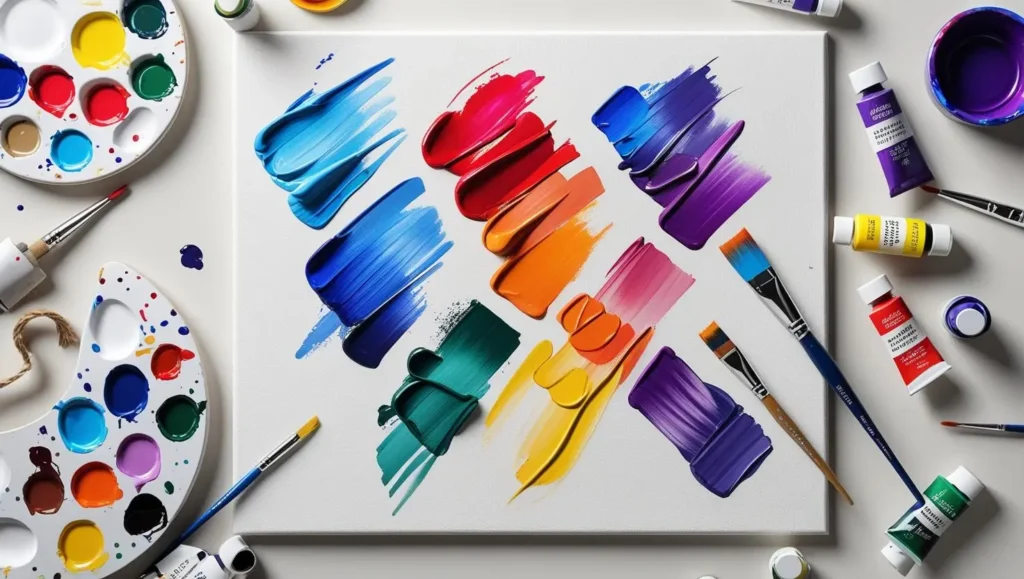
🎨 Why Color Mixing Matters (More Than You Think)
Acrylic paint comes in tons of shades, but you don’t need to buy every single tube. Knowing how to mix your own colors saves money and unlocks creative freedom. Whether you want the perfect sunset orange or a calming ocean teal, understanding how to combine basic colors gives you total control.
Plus, it’s just plain fun—like being a color wizard!
🌈 Meet the Primary Colors: Your Magic Trio
Before we mix, let’s get to know the primary colors:
- Red
- Blue
- Yellow
These are the foundation of all other colors. You can’t create them by mixing other paints, but you can mix them to make every other color on the wheel. Neat, right?
🌀 Secondary Colors: What Happens When Two Become One
Mix two primaries together, and you get a secondary color:
- Red + Blue = Purple
- Blue + Yellow = Green
- Yellow + Red = Orange
Try it! Start with equal parts of each color, and adjust if you want something more vibrant or muted. For example, more red in your red-blue mix gives you a warmer, wine-like purple.
🎨 The Power of the Color Mixing Chart (Your Best Friend!)
A color mixing chart for acrylics is a visual guide that shows what happens when different colors are combined. Think of it as a cheat sheet for perfect shades.
Here’s a simple way to create your own:
- Draw a grid on a sheet of paper or canvas.
- Along the top and left side, list your primary and secondary colors.
- Where the rows and columns meet, mix the two intersecting colors and paint a swatch.
- Label each square with the mix (example: “1 part red + 1 part yellow”).
👉 Pro Tip: Leave some space to experiment with adding white or black to see how your color changes (tints and shades).
Or download a printable color mixing chart online and fill it in with your own paints!
🧪 Tints, Shades & Tones: The Final Touch
Want your colors to pop, soften, or go moody? Enter the world of tints, shades, and tones.
- Tints = Color + White (pastel and light)
- Shades = Color + Black (deep and dramatic)
- Tones = Color + Gray (soft and muted)
These tweaks help you create depth and mood in your painting. Try adding a little white to your red—you’ll get a beautiful pink. Add black, and now it’s burgundy. It’s like color magic!
🧑🎨 Mixing Neutrals (and Avoiding the Mud!)
Mixing complementary colors (colors opposite each other on the color wheel) like red + green or blue + orange creates neutral tones like browns and grays. These are great for shadows or backgrounds.
But beware: too many colors mixed together can create “mud.” To avoid this:
- Stick to two or three colors per mix
- Clean your brush between colors
- Test mixes on scrap paper first
💡 Beginner Mixing Tips to Keep You Smiling
- Use a palette knife instead of your brush to mix acrylic colors evenly.
- Keep notes of your favorite recipes—you’ll want to recreate them later!
- Start with small amounts—it’s easier to add more color than to fix an overload.
- Let layers dry before adding more color on your canvas (acrylics dry fast!).
🖌How to mix acrylic colors – Try These Fun Starter Combos!
Want to start mixing right away? Try these:
- Peachy Sunset: 1 part red + 2 parts yellow + a touch of white
- Lavender: 1 part red + 1 part blue + a good amount of white
- Mint Green: 2 parts yellow + 1 part blue + white
- Warm Brown: 1 part red + 1 part green + a tiny touch of black
- Coral Blush
🟥 2 parts red + 1 part yellow + 2 parts white
🌸 A soft, beachy coral perfect for florals and sunsets. - Sky Blue
🟦 2 parts blue + 1 part white
☁️ A gentle, dreamy blue like a clear summer sky. - Olive Green
🟩 2 parts yellow + 1 part blue + a tiny touch of red
🌿 Earthy and muted—great for leaves or vintage vibes. - Dusty Rose
🟥 1 part red + 1 part white + touch of black
🌹 Romantic and soft, with an antique feel. - Ocean Teal
🔵 1 part blue + 1 part green + a small touch of white
🌊 Deep and bold—beautiful for ocean scenes. - Sunflower Yellow
🟨 2 parts yellow + tiny touch of red
🌻 Warm and happy, just like a sunny field. - Muted Mauve
🟥 1 part red + 1 part blue + 2 parts white + tiny touch of black
🌫 A sophisticated, moody lavender-pink. - Chocolate Brown
🟫 1 part red + 1 part blue + 1 part yellow
🍫 The classic neutral. Add more red for a warmer tone or more blue for cooler.
📌 Final Thoughts: Practice Makes Perfect (and Fun!)
Learning how to mix acrylic colors is a journey full of happy surprises—and the occasional “oops” moment. Don’t stress about getting the exact shade every time. Part of the joy of painting is experimenting, playing, and discovering what you love.
And remember: every artist started as a beginner. With your color mixing chart for acrylics by your side, you’re already one big brushstroke ahead!